
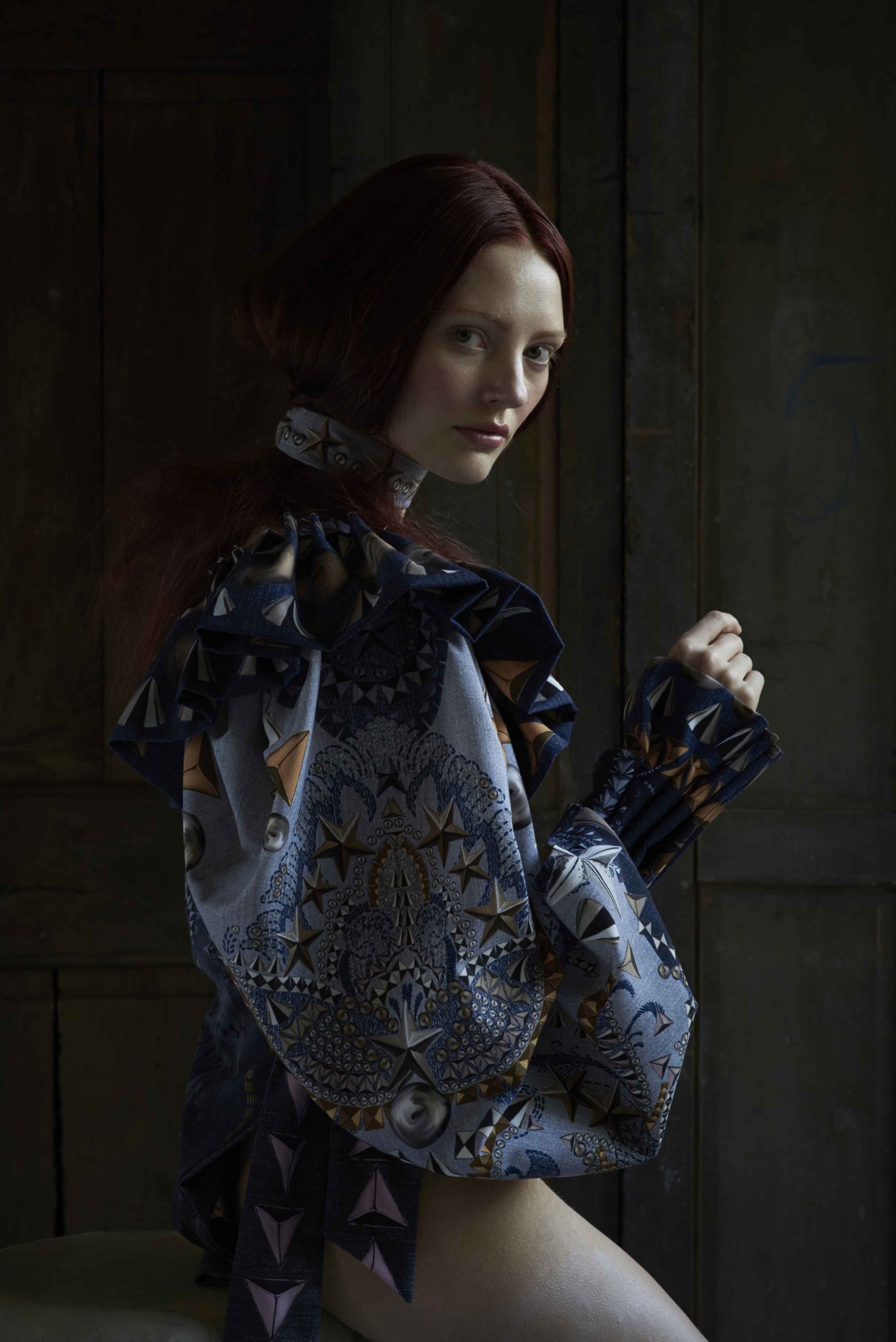
The ‘Anti-AI’ Handicraft Aesthetic: Why Handmade Design Is Having Its Biggest Moment Yet
The ‘Anti-AI’ Handicraft Aesthetic is one of the most talked-about creative movements shaping fashion and interiors in 2026, and if you work in fashion print design or follow surface pattern trends, you’ve almost certainly felt its pull. At Design Union, we’ve watched this movement grow from a quiet conversation in design studios to a full-blown industry shift, and we think it’s worth taking a close look at what it actually means, where it came from, and why it matters so much right now.
Key Takeaways
| Question | Answer |
|---|---|
| What is the ‘Anti-AI’ Handicraft Aesthetic? | It’s a creative movement that champions visibly handmade, imperfect, and human-led design as a direct counterpoint to the rise of AI-generated imagery. |
| Why is it trending in 2026? | As AI tools become more widespread, buyers and brands are actively seeking work that carries proof of human process, making hand-crafted textile and print work more commercially desirable than ever. |
| How does it affect fashion print design? | Buyers at trade shows like Premiere Vision Indigo and Munich Fabric Start are now specifically requesting prints that show visible brushwork, texture irregularities, and hand-drawn linework. |
| Does this mean studios should avoid digital tools entirely? | Not at all. The best studios combine handmade artwork with professional digital workflows, delivering layered Photoshop PSD files that retain every hand-crafted mark. |
| Where can you see this aesthetic in action? | Major international trade shows, including Premiere Vision Indigo in Paris, Como Crea, and Munich Fabric Start, are showcasing collections built around this handmade-first philosophy. |
| Is this trend relevant to interiors as well as fashion? | Absolutely. The anti-AI handicraft aesthetic is showing up just as strongly in homeware, upholstery, and surface pattern work as it is in apparel. |
| How can a print design studio UK stay ahead of this trend? | Through rigorous research, hands-on experimentation, and a constantly evolving portfolio that puts human creativity at the centre of every design decision. |
Understanding the ‘Anti-AI’ Handicraft Aesthetic and Where It Comes From
The ‘Anti-AI’ Handicraft Aesthetic didn’t appear overnight. It grew, quite naturally, as a response to the explosion of AI image-generation tools that began flooding the creative industries over the past few years.
When everything starts to look smooth, flawless, and algorithmically “perfect,” people start craving the opposite. They want to see the trace of a human hand, the irregularity of a brushstroke, the slight wobble of a hand-drawn line.
This desire isn’t new in design history. The Arts and Crafts movement of the late 19th century had very similar roots, pushing back against the mechanical perfection of industrial production. What’s new in 2026 is the specific context: the “machine” people are reacting against now isn’t a loom or a printing press, it’s a generative AI model.
The result is a genuine commercial and cultural appetite for work that wears its human origins proudly. For studios working in fashion print design, this is both exciting and clarifying.
The ‘Anti-AI’ Handicraft Aesthetic in Fashion Print Design: What Buyers Are Actually Looking For
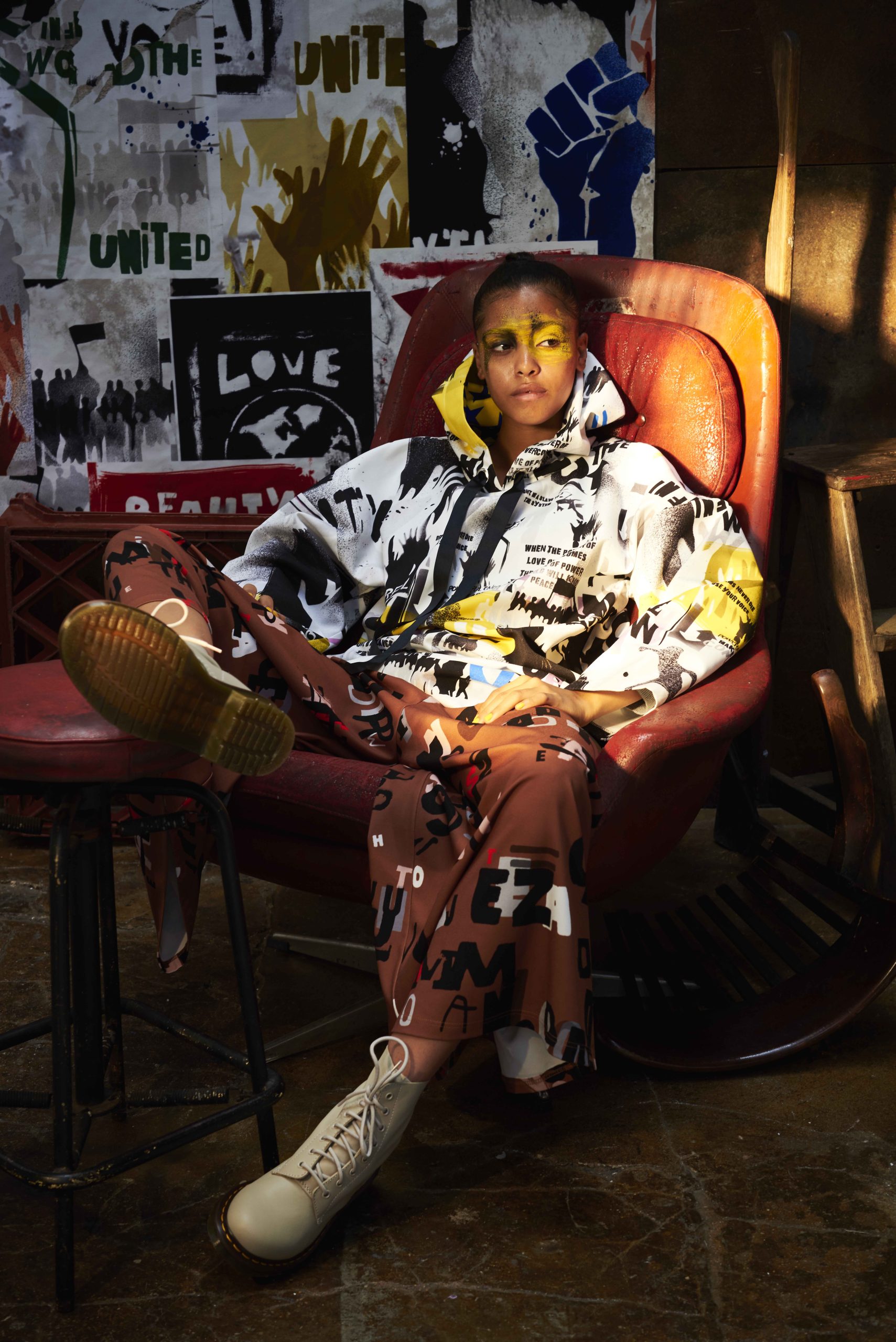
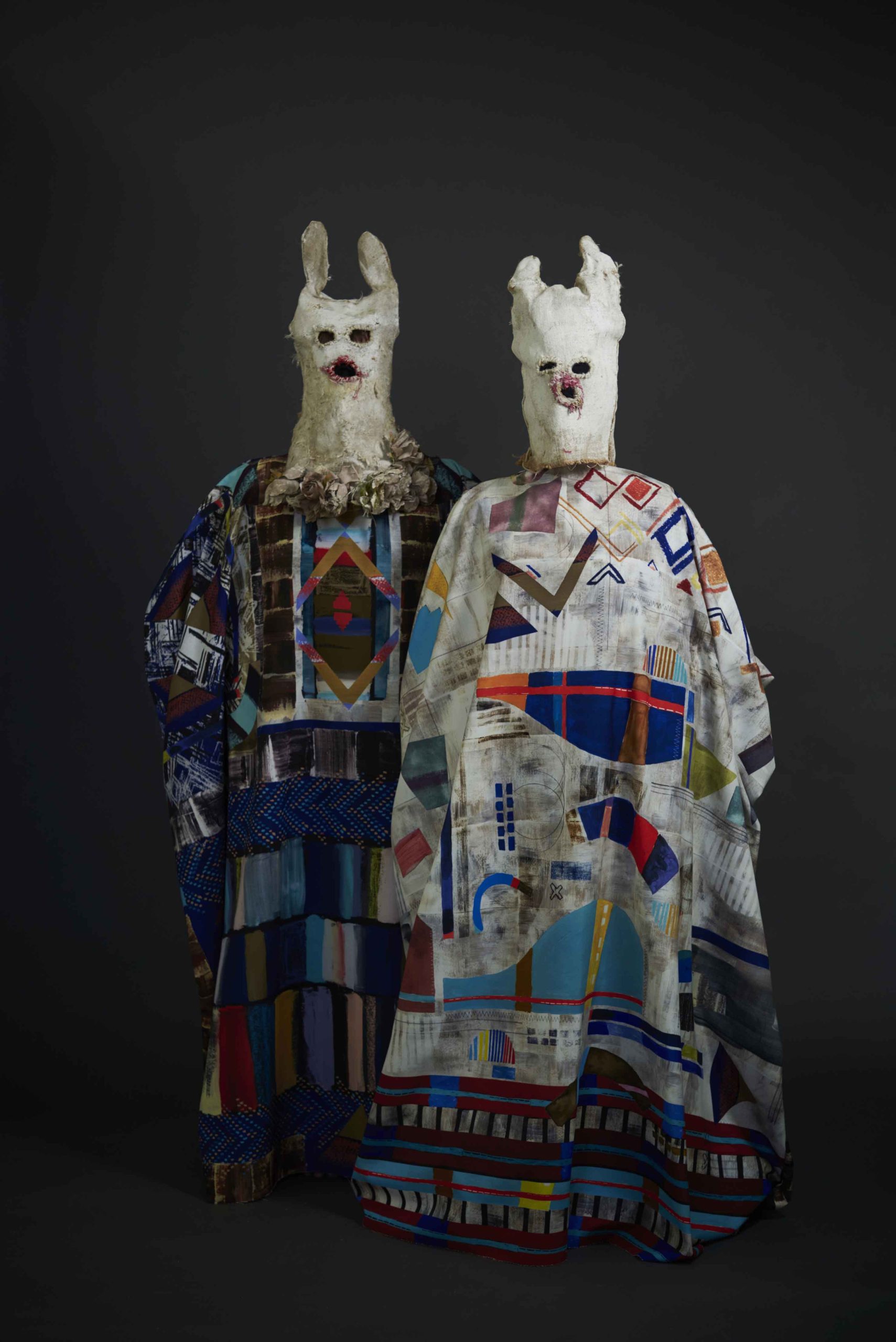
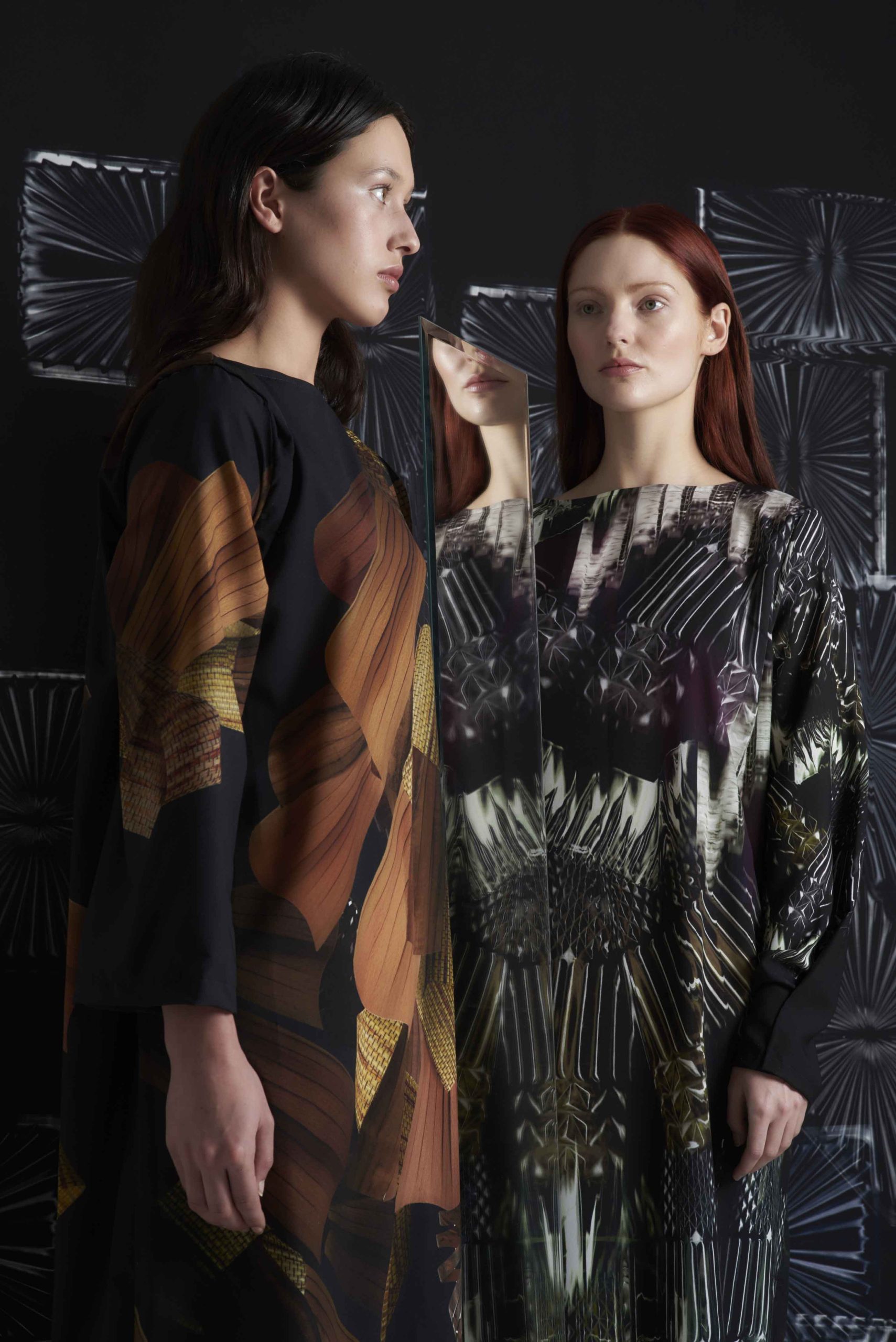
If you’ve been following collections shown at events like Premiere Vision Indigo in Paris or Munich Fabric Start in 2026, you’ll have noticed a clear shift in what buyers are responding to. Prints with visible hand-painted texture, loose gestural marks, watercolour bleeds, and imperfect repeat structures are consistently attracting the strongest attention.
This matters a great deal for any textile print design studio trying to build a commercially relevant portfolio right now.
The specific qualities buyers are gravitating toward include:
- Visible brushwork and mark-making that clearly couldn’t have been generated by an algorithm
- Irregular textures, including paper grain, ink bleed, and resist-dye effects
- Hand-drawn linework with natural variation in weight and pressure
- Collage and mixed-media references that layer different physical techniques
- Deliberate “imperfections” in colour registration and pattern repeat
What’s interesting is that none of this means buyers want badly made designs. They want work that is beautifully handmade, where the human skill is obvious and the craft is high. The ‘Anti-AI’ Handicraft Aesthetic is about celebrating human ability, not rejecting quality.
Why the ‘Anti-AI’ Handicraft Aesthetic Is So Relevant for a Textile Print Design Studio London
London has always been a strong creative hub for surface pattern and print, and a textile print design studio London is particularly well-positioned to engage with this trend. The city’s design culture is steeped in a tradition of research-led, hands-on making, and that heritage maps perfectly onto what the anti-AI movement values most.
At Design Union, Eileen Gleeson and our team have built our entire practice around rigorous research and experimentation. We don’t just sketch ideas and digitise them. We go through a genuine creative process, exploring materials, references, and techniques before arriving at the final artwork.
That process leaves marks in the work, and those marks are exactly what gives a print its character and commercial appeal right now. A textile print design studio London-based studio with that kind of embedded methodology is genuinely different from a workflow that starts and ends with a digital prompt.
The ‘Anti-AI’ Handicraft Aesthetic Across Fashion and Interiors
One of the most interesting things about this trend is how evenly it’s spread across both fashion print design and interiors. It isn’t just an apparel story.
In fashion, we’re seeing it in printed shirting fabrics, bold placement prints for resort wear, and delicate floral repeats for childrenswear that carry obvious painted origins. In interiors, it’s showing up in upholstery fabric, curtaining, and wallpaper patterns that prioritise texture and visible craft over digital cleanness.
For a studio like ours, which focuses specifically on both fashion and interiors, this breadth is genuinely encouraging. Our constantly evolving portfolio covers both areas, and the anti-AI handicraft aesthetic fits naturally into the kind of beautiful, unique print designs we’ve always been drawn to creating.
We exhibited connections with both Premiere Vision and Pantone View, two of the most respected colour and trend authorities in the industry, and the conversation around handmade aesthetics has been consistent at both levels.
How Print Studios Are Adapting: Craft First, Digital Second
Here’s something worth being clear about: the ‘Anti-AI’ Handicraft Aesthetic doesn’t mean abandoning professional digital production workflows. It means putting the craft at the start of the process, not at the end.
The most effective approach in 2026 looks something like this:
- Start with physical research and experimentation, gathering material references, textures, and hand-generated artwork
- Develop original handmade artwork using painting, drawing, printing, or mixed-media techniques
- Digitise carefully, preserving texture and character rather than smoothing it away
- Finish in Photoshop, building out the design as layered PSD files that keep the handmade origins fully intact and allow for easy colourway changes
This is exactly the workflow we use at Design Union. Our designs are presented as digital Photoshop PSD files in layers, which makes them highly practical for buyers and manufacturers while preserving every brushstroke and mark from the original artwork.
The layered PSD format also makes it genuinely straightforward for clients to re-colour, resize, or adapt artwork to their specific production requirements, without ever losing that original handmade quality.
The ‘Anti-AI’ Handicraft Aesthetic at International Trade Shows in 2026
If you want to see where this aesthetic is landing commercially, the trade show calendar is one of the best places to look. At Premiere Vision Indigo in Paris, Como Crea, and Munich Fabric Start, the ‘Anti-AI’ Handicraft Aesthetic has been consistently well-received in 2026 across buyer groups from multiple markets.
We’ve seen strong interest from clients across China, Korea, Japan, Los Angeles, and Turkey, all markets where our international agents represent our collection. The appetite for prints that carry visible human craft is genuinely global right now, not just a UK or European conversation.
This global reach matters because it tells you the trend has real commercial legs. When buyers in multiple distinct markets are all seeking the same quality of handmade authenticity, that’s a signal of something durable rather than a short-lived aesthetic moment.
For any print design studio UK or international studio thinking about how to position their portfolio for the coming seasons, aligning with the anti-AI handicraft direction is a practical commercial decision, not just a philosophical one.
Why Human Skill Remains the Most Valuable Creative Asset in 2026
It’s easy to frame the ‘Anti-AI’ Handicraft Aesthetic purely as a reaction, as if it’s just about saying “no” to AI. But the more interesting and more useful way to understand it is as an affirmation of what human creativity actually offers.
A skilled designer brings cultural knowledge, aesthetic judgement, physical material sensitivity, and a genuine point of view to their work. Those things can’t be replicated by a model that learns from existing imagery. They’re uniquely human, and in 2026, they’re increasingly understood as commercially valuable precisely because they’re rare.
That’s why a research-led print design studio UK that invests in genuine experimentation and hands-on making is in a genuinely strong position right now. The rigorous process we bring to our work at Design Union, going through real research before arriving at final artwork, is exactly what the market is looking for.
We’ve always believed that creating inspiring contemporary print designs requires more than just technical skill. It requires curiosity, discipline, and a willingness to experiment. The ‘Anti-AI’ Handicraft Aesthetic is, in many ways, the industry finally catching up to that belief.
How to Spot the ‘Anti-AI’ Handicraft Aesthetic in a Print Collection
If you’re browsing a portfolio or visiting a studio to view their collection, here are some of the clearest markers that a design genuinely embodies the anti-AI handicraft approach:
- Texture that reads as physical, not digitally simulated
- Colour bleeding and mixing that suggests a wet-on-wet painting technique
- Line variation that shows hand pressure rather than a clean vector path
- Compositional looseness, where elements have a placed-by-hand quality rather than a mathematically balanced arrangement
- Evidence of process, such as traces of underdrawing, layering marks, or resist techniques
- Unique repeat structures that feel designed rather than algorithmic
When you’re viewing a collection in person, or even over a Zoom call, these qualities become very easy to read. At Design Union, we use high-definition cameras during video appointments specifically so these details truly show off the handmade character of our designs. There’s a real difference between seeing a thumbnail and seeing a full-resolution image that reveals every mark and texture clearly.
If you’d like to make an appointment to see our collection, whether in person or via a Zoom meeting, we’d love to show you the work up close.
The Future of the ‘Anti-AI’ Handicraft Aesthetic: Is It Here to Stay?
Some trends in fashion print design burn bright for a season and then fade. The ‘Anti-AI’ Handicraft Aesthetic feels different, and there are good structural reasons for that assessment.
As AI tools become more capable and more widely used, the gap between AI-generated and genuinely handmade work will become more culturally significant, not less. The more ubiquitous AI imagery becomes, the more valuable human craft becomes in contrast.
We’re also seeing this aesthetic connect with broader consumer values around sustainability, transparency, and a desire to know where things come from. Handmade design, with its visible process and human story, fits naturally into those values.
For a textile print design studio London or any fashion print design practice anywhere in the world, investing in genuine craft skills and research-led creative processes looks like a sound long-term strategy for 2026 and beyond.
Conclusion
The ‘Anti-AI’ Handicraft Aesthetic is more than just a passing visual trend. It’s a meaningful shift in how the fashion and interiors industries value creative work, and it puts studios that invest in genuine research, experimentation, and hands-on making in a genuinely exciting position.
At Design Union, this movement aligns naturally with how Eileen Gleeson and our team have always worked: through rigorous exploration, beautiful and unique artwork, and a constantly evolving portfolio that reflects real human creativity. Our work spans fashion and interiors, reaches buyers across China, Korea, Japan, Los Angeles, and Turkey, and is presented in a format (layered Photoshop PSD files) that makes it immediately practical without losing a single mark of its handmade origins.
Whether you’re a buyer, a brand, or a fellow creative thinking about where fashion print design is heading, the ‘Anti-AI’ Handicraft Aesthetic is worth taking seriously. It represents something the market is genuinely asking for right now, and the studios best placed to deliver it are the ones that never stopped putting human craft first.
We’d love to show you our collection. Please use the form on our contact page to get in touch and arrange a viewing at a time that suits you.
Frequently Asked Questions
What exactly is the ‘Anti-AI’ Handicraft Aesthetic in fashion and textile design?
The ‘Anti-AI’ Handicraft Aesthetic refers to a growing preference in fashion and textile design for work that shows clear evidence of human craft, such as brushwork, hand-drawn linework, and physical texture, as opposed to the clean, algorithmically generated imagery associated with AI design tools. In 2026, this aesthetic is a genuine commercial trend, not just a philosophical position, with buyers at major trade shows actively seeking prints that carry handmade character.
Is the ‘Anti-AI’ Handicraft Aesthetic just a temporary backlash or something more lasting?
Most indicators suggest it’s more lasting than a seasonal reaction. The more AI tools proliferate and their outputs become commonplace, the more culturally valuable genuine handmade work becomes, which means the commercial case for craft-led design actually strengthens over time rather than weakening. Studios that have invested in research-led, hands-on creative processes are well positioned for the long term.
How does a print design studio UK work within the ‘Anti-AI’ Handicraft Aesthetic while still delivering professional digital files?
The most effective approach is to treat craft as the starting point and digital production as the finishing stage: create original handmade artwork first, then digitise and build it out as layered Photoshop PSD files that preserve every handmade mark. This means the final deliverable is both practically flexible for clients and authentically rooted in human craft.
Does the ‘Anti-AI’ Handicraft Aesthetic only apply to fashion, or is it showing up in interiors too?
It’s very much present in both markets. In 2026, the aesthetic is appearing in apparel prints, upholstery fabrics, wallpaper, and homeware surface patterns with equal strength. Any fashion print design or interior textile studio that positions its work around visible craft and human process can engage with this trend commercially across both sectors.
How can I tell if a textile print design is genuinely handmade or AI-generated?
Genuinely handmade prints typically show physical texture, natural colour variation, irregular line weight, and compositional qualities that are difficult for algorithms to replicate convincingly. Viewing designs in high resolution, whether in person or via a high-definition video appointment, makes these distinctions very readable.
Where is the ‘Anti-AI’ Handicraft Aesthetic most visible at trade shows in 2026?
Events like Premiere Vision Indigo in Paris, Munich Fabric Start, and Como Crea are all strong places to observe this aesthetic in a commercial context. These shows reflect what buyers from global markets are actively purchasing, and handmade-quality print design has been consistently well-received at all three in 2026.
Is the ‘Anti-AI’ Handicraft Aesthetic relevant for international markets, or is it mostly a European trend?
It’s genuinely international. Buyers and brands across Asia, North America, and Europe are all showing appetite for prints that carry visible human craft. For any textile print design studio with international reach, positioning work around authentic handmade process is commercially relevant across multiple major markets right now.